 en
en 
CO2 Laser Stretch Mark Treatment
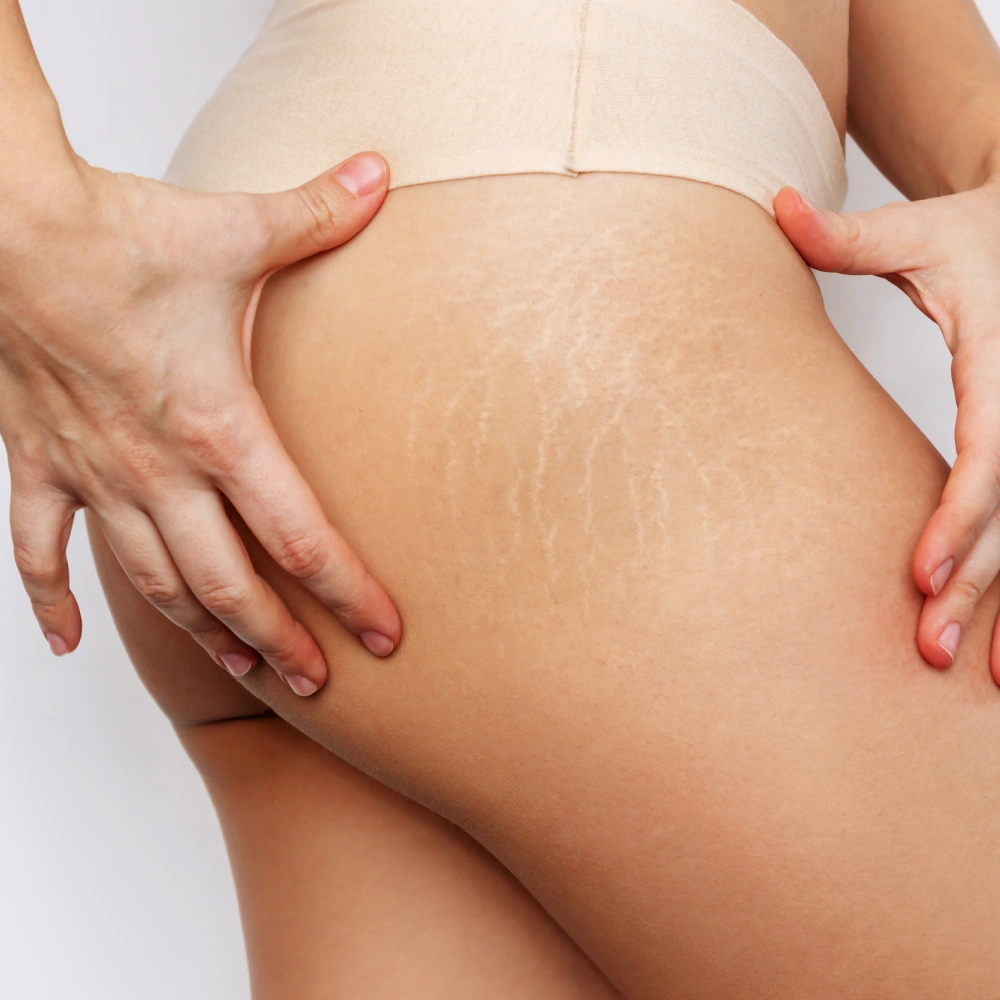
What is CO2 Laser Stretch Mark Treatment?
CO2 Laser Stretch Mark Treatment is an energy-based aesthetic procedure designed to reduce the appearance of stretch marks, support skin quality, and make the difference between affected and surrounding skin less noticeable. Stretch marks develop as a response to rapid stretching and structural changes in the skin. Therefore, they are not only a surface-level concern but also involve the dermal structure. Fractional CO2 laser works by creating controlled micro-ablative channels in the skin to stimulate the natural renewal process. The goal is not to completely eliminate stretch marks, but to make them less visible.
Why do stretch marks occur?
Stretch marks are most commonly associated with pregnancy, rapid weight changes, growth spurts, increased muscle mass, hormonal changes, and genetic predisposition. When the skin is stretched quickly, collagen and elastin fibers in the dermis may be affected, leading to the formation of linear depressions. In the early stages, stretch marks may appear red or purple, and over time they often fade into a lighter, whitish tone. This distinction is important in treatment planning, as newer and older stretch marks may respond differently.
Why is CO2 laser preferred?
This treatment is most commonly used to reduce the appearance of stretch marks on areas such as the abdomen, hips, thighs, breasts, waist, and arms. In some individuals, color difference is the main concern, while in others, depth and texture irregularity are more noticeable. CO2 laser aims to address both aspects by helping improve the transition between stretch marks and surrounding skin, creating a more balanced and refined appearance.
How does CO2 laser treatment work?
Fractional CO2 laser creates multiple controlled micro-treatment zones in the skin. This controlled effect activates the skin’s natural healing process and supports new collagen production over time. As a result, gradual improvement in both skin texture and appearance of stretch marks is expected. The outcome is not immediate; visible changes typically develop over weeks and across multiple sessions.
Do new and old stretch marks respond the same way?
No. Newly formed stretch marks, which appear more red or purple, generally tend to respond better to treatment. Older, white stretch marks may also improve, but the process often requires more sessions and patience. Therefore, factors such as age, color, depth, and location of the stretch marks should be evaluated together when planning treatment. Setting realistic expectations is essential for satisfaction.
Which areas can be treated?
CO2 laser stretch mark treatment is most commonly applied to the abdomen, hips, inner and outer thighs, breasts, and upper arms. It may be considered for stretch marks developed after pregnancy, weight fluctuations, or during adolescence. Since each area differs in skin thickness and sensitivity, treatment intensity and session planning are adjusted accordingly.
How is the procedure performed?
The procedure is performed in a clinical setting. First, the stretch marks are evaluated in terms of type, color, depth, and extent. Then, fractional CO2 laser is applied to the affected area with controlled passes. As noted in the provided content, the laser creates micro-ablative channels that stimulate tissue remodeling, and multiple sessions are typically recommended at intervals of 4–6 weeks. During the procedure, mild burning, warmth, or stinging sensations may occur. The duration depends on the size of the treated area.
Who is it suitable for?
This treatment may be considered for adults who are bothered by stretch marks on areas such as the abdomen, thighs, hips, breasts, or arms. It is particularly suitable for individuals seeking non-surgical improvement and who are open to gradual results over time. However, conditions such as active infection, open wounds, recent tanning, certain skin diseases, keloid tendency, or a high risk of pigmentation may influence treatment planning. Suitability should always be determined through detailed evaluation.
How many sessions are required?
CO2 laser stretch mark treatment is usually not a single-session procedure. Depending on the age, depth, color, and location of the stretch marks, multiple sessions may be planned. As indicated in the provided content, sessions are typically scheduled at intervals of 4–6 weeks. Some individuals may notice early improvements in skin texture, but more visible results usually develop with repeated sessions over time.
What is the recovery process like?
After the procedure, redness, sensitivity, mild swelling, dryness, fine crusting, or warmth may occur in the treated area. As noted in the provided content, redness typically subsides within a few days, although recovery may take longer with more intensive treatments. During the early period, it is important to avoid irritation, not to pick at crusts, and to protect the skin from excessive heat and friction. Sun protection is especially important, as the skin may become temporarily more sensitive.
Does CO2 laser completely remove stretch marks?
No. Stretch marks are structural changes in the skin, and the goal is usually to reduce their visibility rather than eliminate them entirely. Improving color difference, reducing depth, and enhancing skin texture are the most realistic expectations. Therefore, approaching treatment with the goal of visible improvement rather than complete removal is more appropriate.
What is the advantage in terms of natural results?
One of the key advantages of CO2 laser is that it provides gradual improvement without creating an artificial or dramatic change. As results develop over time, the treated area blends more naturally with the surrounding skin. The goal is to make stretch marks less noticeable and achieve a more balanced skin appearance.
Why is pre-treatment evaluation important?
Not all stretch marks have the same structure. Some individuals may have newer, superficial marks, while others may have older, deeper ones. In addition, skin type, pigmentation tendency, tanning status, and sensitivity all influence treatment planning. Especially in darker skin tones or individuals prone to post-inflammatory hyperpigmentation, a more cautious approach is required. Therefore, a detailed evaluation by Dr. Mustafa Kemal Ataönder helps determine whether CO2 laser is suitable and how it should be planned in terms of intensity and frequency.
Frequently asked questions about CO2 Laser Stretch Mark Treatment
Does CO2 laser completely remove stretch marks?
No. The goal is to reduce their appearance and improve skin texture rather than completely eliminate them. Results vary depending on the type and depth of the stretch marks.
Do newer stretch marks respond better?
Generally, yes. Newer red or purple stretch marks tend to respond better, while older white marks may require more sessions.
Is the procedure painful?
Mild burning, warmth, or stinging sensations may occur during the procedure. The level of discomfort varies depending on the treatment area and individual sensitivity.
Is crusting normal after the procedure?
Yes. Mild redness, dryness, and fine crusting are common and are part of the controlled healing process. Proper aftercare is important.
How many sessions are needed?
This depends on the age, depth, color, and location of the stretch marks. Multiple sessions are usually required and are planned at specific intervals.
Learn more: For detailed information about CO2 Laser Stretch Mark Treatment and other treatment options, you can visit the contact page. For informative content about treatments, you can explore the YouTube channel.
