 en
en 
Hair Loss Treatment / Hair Mesotherapy
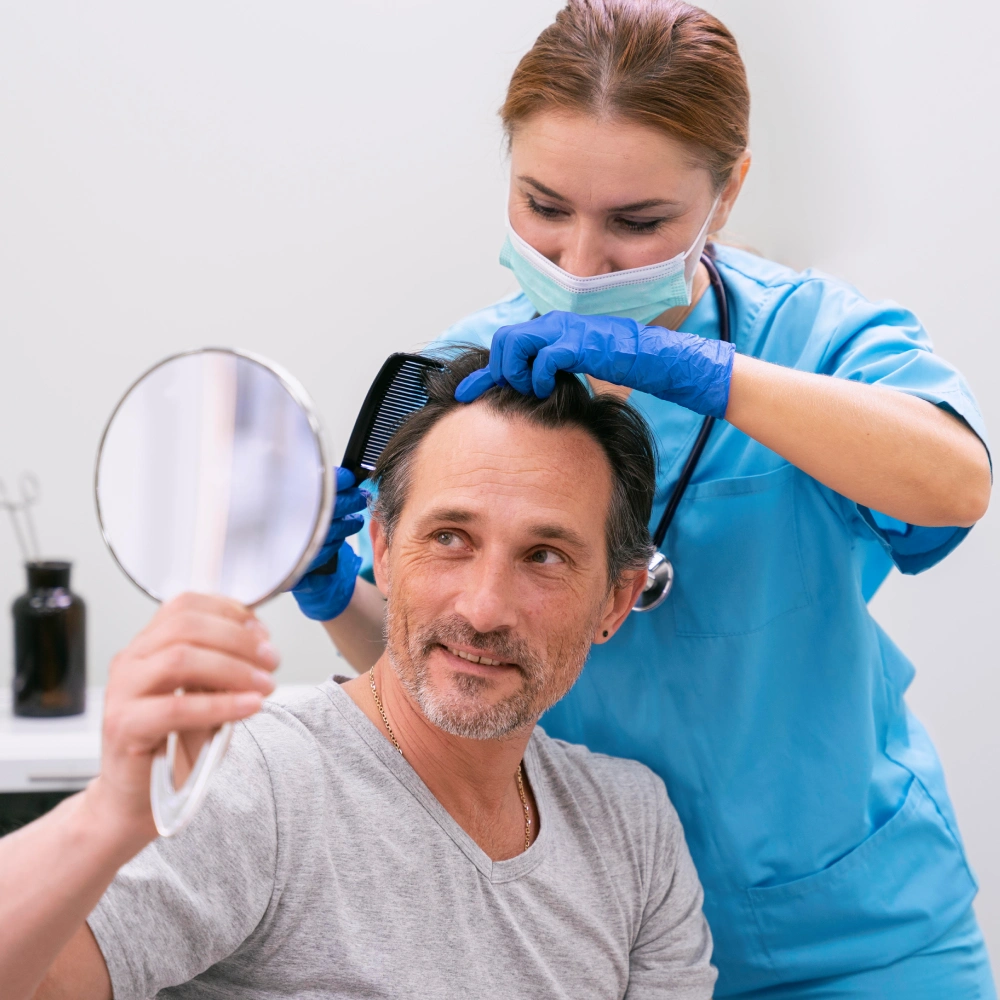
What is Hair Loss Treatment / Hair Mesotherapy?
Hair loss treatment is a comprehensive approach that aims to understand the underlying cause of hair loss and create a personalized roadmap accordingly. Hair loss does not occur for a single reason; genetic predisposition, hormonal changes, certain medical conditions, medications, stress, nutritional deficiencies, and scalp-related issues may all contribute. As also noted in the provided content, effective treatment involves not only slowing hair loss but also accurately identifying the underlying cause.
What is hair mesotherapy?
Hair mesotherapy is a supportive treatment method that involves delivering targeted substances into the scalp through microinjections. These formulations may include vitamins, minerals, amino acids, peptides, and other supportive components tailored to individual needs. As stated in the provided content, hair mesotherapy is defined as delivering targeted mixtures into the scalp to support dormant follicles, reduce shedding, and stimulate new hair growth. However, it is important to note that mesotherapy is not planned the same way for every type of hair loss and does not provide the same level of results for all individuals.
Why does hair loss occur?
Hair loss can present differently in men and women. Androgenetic alopecia (genetic hair thinning) is one of the most common causes. In addition, thyroid disorders, postpartum changes, menopause, anemia, rapid weight loss, intense stress, certain medications, and scalp infections may also lead to hair loss. As highlighted in the provided content, sudden or patchy hair loss may sometimes indicate an underlying medical condition. Therefore, identifying the cause is especially important in cases of new, rapidly progressing, or unusual hair loss patterns.
What is hair mesotherapy used for?
Hair mesotherapy is most commonly considered as a supportive option in cases of diffuse thinning, early-stage androgenetic alopecia, decreased hair vitality, and reduced hair quality. As noted in the provided content, it may be suitable for both men and women experiencing early thinning or general hair loss. It is often preferred by individuals who feel that their hair has become weaker rather than completely lost. The goal is not to create dramatic changes comparable to hair transplantation, but to support existing hair in suitable patients.
How does hair mesotherapy work?
The aim of hair mesotherapy is to provide targeted support directly to the scalp and follicular environment. The applied substances are thought to contribute to circulation and tissue support in the scalp. However, as indicated in scientific literature mentioned in the provided content, protocols, ingredients, and treatment sessions vary significantly, and there is no single standardized approach for all patients. Therefore, hair mesotherapy should be considered not as a standalone miracle solution, but as a supportive and personalized option when appropriate.
Why is personalized planning important in hair loss treatment?
Not all hair loss is the same. In some individuals, genetic thinning may be the main factor, while in others, stress-related telogen effluvium, hormonal imbalances, or nutritional deficiencies may play a role. Therefore, effective treatment is not limited to scalp procedures alone but may also require investigation of underlying causes. As emphasized in the provided content, understanding the cause is essential before planning treatment. A personalized approach provides more accurate and realistic outcomes.
How is hair mesotherapy performed?
The procedure is performed in a clinical setting. First, the scalp and hair loss pattern are evaluated. Then, microinjections are applied at specific intervals using very fine needles. As noted in the provided content, treatments may initially be planned every two weeks for approximately 8–10 sessions, followed by maintenance sessions on a monthly basis. In some cases, combination with PRP may be considered for enhanced support. However, the number and frequency of sessions vary depending on the individual’s hair structure, cause of hair loss, and treatment goals.
Who is it suitable for?
Hair mesotherapy may be considered for adults experiencing diffuse thinning, weakened hair strands, early-stage androgenetic hair loss, or those seeking non-surgical supportive options for scalp health. As indicated in the provided content, it may be suitable for both men and women with early thinning or general hair loss. However, in cases of sudden patchy hair loss, scalp infections, or suspected systemic conditions, further medical evaluation is required before planning treatment. Suitability should always be determined through clinical assessment.
Is hair mesotherapy sufficient on its own?
Not always. In some individuals, mesotherapy may provide supportive benefits, while in others, it may be more effective when combined with primary treatments, PRP, scalp care, or management of underlying causes. As highlighted in the provided content, there is no single standardized protocol, and combination approaches are often considered. Therefore, it should not be presented as a one-size-fits-all solution, but as part of a personalized treatment plan.
When are results noticeable?
Results in hair loss treatments are generally evaluated gradually. As noted in the provided content, it may take several months to observe meaningful changes. Similarly, the goal of hair mesotherapy is not immediate transformation but gradual reduction in shedding, strengthening of existing hair, and improved overall hair appearance in suitable patients. Therefore, it is more realistic to approach treatment as a long-term process rather than expecting immediate results.
What is the recovery process like?
After the procedure, mild sensitivity, small redness points, slight stinging, or temporary scalp reactions may occur. These effects are usually short-lived. It is important to avoid unnecessary irritation, refrain from washing with very hot water, and follow post-treatment recommendations. Early changes do not reflect final outcomes, as evaluation in hair treatments requires longer follow-up.
What is the advantage in terms of natural results?
One of the main advantages of hair mesotherapy is that it focuses on supporting existing hair rather than artificially altering hairlines. The goal is not to create dramatic visual change in a single session, but to contribute to healthier and stronger-looking hair. For individuals seeking gradual and non-surgical improvement, this approach offers a more natural option. A detailed evaluation by Dr. Mustafa Kemal Ataönder helps determine the type of hair loss, suitability of mesotherapy, and the need for combination treatments.
Frequently asked questions about hair loss treatment / hair mesotherapy
Does hair mesotherapy regrow hair?
In some suitable patients, it may support scalp health and strengthen existing hair. However, the level of new hair growth varies depending on the cause, duration, and follicle condition.
Is hair mesotherapy sufficient on its own?
Not always. In some cases, it may be supportive, while in others, combination with additional treatments and management of underlying causes may be more appropriate.
Should the cause of hair loss be investigated first?
Yes. Since hair loss can result from various causes such as genetics, hormonal changes, medications, or medical conditions, understanding the cause is essential for proper treatment planning.
Can hair mesotherapy be applied to women?
Yes, it may be considered in suitable female patients as well. However, suitability depends on the type and cause of hair loss.
Can daily activities be resumed after the procedure?
In most cases, yes. Mild sensitivity or small redness points may occur, but these are usually temporary. Following aftercare recommendations is important.
Learn more: For detailed information about hair loss treatment / hair mesotherapy and other treatment options, you can visit the contact page. For informative content about treatments, you can explore the YouTube channel.
