 en
en 
Laser Tattoo Removal
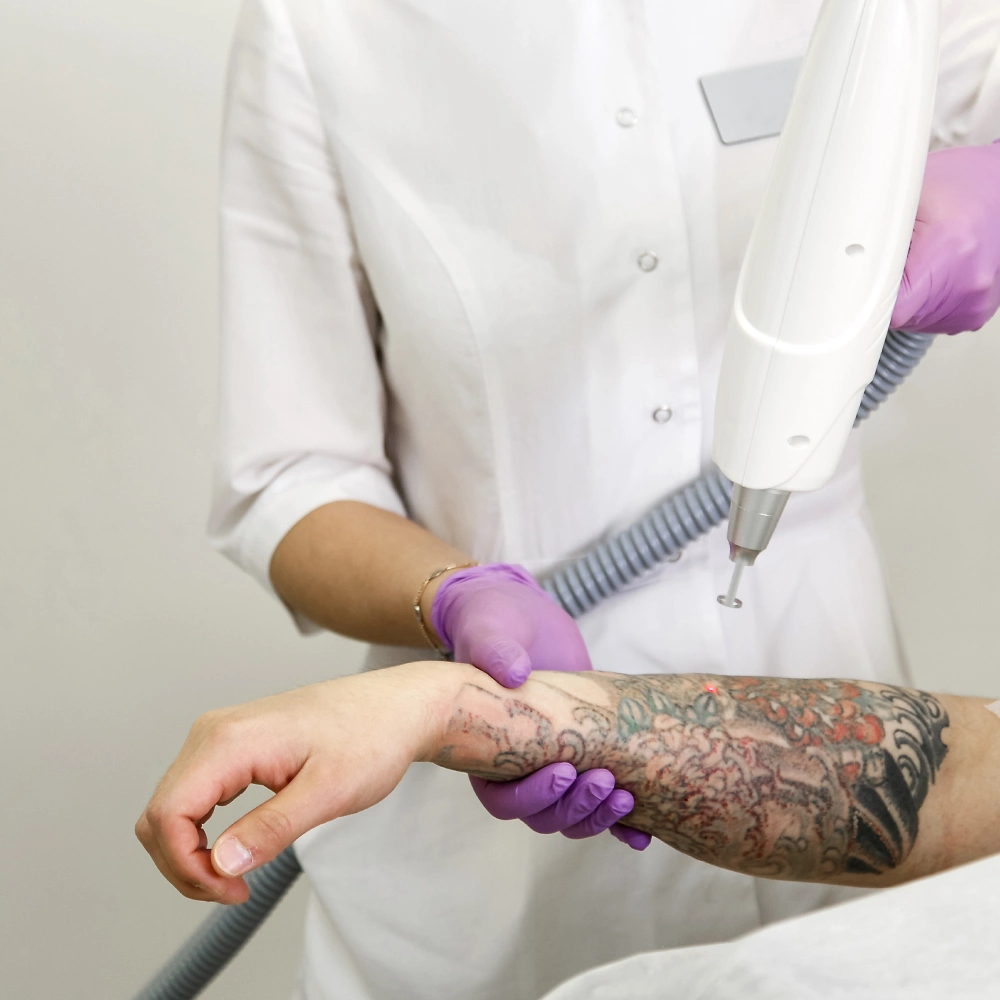
What is Laser Tattoo Removal?
Laser tattoo removal is an energy-based dermatological treatment aimed at reducing the appearance of tattoo pigments embedded in the skin over time. The goal is not to remove the tattoo by scraping or aggressively damaging the skin, but to break down ink particles in a controlled manner and allow the body to gradually eliminate them. Therefore, laser tattoo removal is not a one-session “instant erase” procedure, but a gradual process planned according to the characteristics of the tattoo.
When is laser tattoo removal preferred?
This procedure is most commonly chosen to completely remove unwanted tattoos or to lighten them significantly. Some individuals may want to fully erase a professional tattoo, while others may prefer to fade it partially to make room for a new design. Names, dates, symbols, or tattoos that have become aesthetically undesirable over time are among the most common reasons for seeking this treatment. It is important to understand that not every tattoo fades at the same speed or to the same degree.
How does laser tattoo removal work?
The laser device delivers very short, high-energy pulses that target tattoo pigments. These pulses help break down the ink particles into smaller fragments. Over time, the body’s immune system clears these fragmented pigments. For this reason, visible changes do not occur instantly in a single session; gradual fading is expected. Factors such as the tattoo’s age, color, depth, whether it was professionally or amateurly done, and the individual’s skin type all influence the process.
Which tattoos are easier or more difficult to remove?
In general, black and dark blue pigments tend to respond better to laser treatment, while lighter colors such as green, yellow, turquoise, or certain red tones may be more resistant. Amateur tattoos may respond differently as they often contain more superficial pigment, whereas professional tattoos usually involve denser and deeper ink. Additionally, newer tattoos and older tattoos may not respond in the same way. Therefore, not only color but also depth and pigment density are important factors.
Which laser systems are used?
Laser tattoo removal most commonly involves Q-switched laser systems, and in some cases, picosecond-based technologies may also be considered. As stated in the provided content, advanced Q-switched technology delivers short, high-intensity pulses to target ink particles. The most appropriate system depends on the tattoo’s color, density, and the individual’s skin type. The key factor is not using the “strongest” device, but selecting the most suitable energy parameters for the specific tattoo.
How is the procedure performed?
Initially, the tattoo is evaluated in terms of size, color, location, age, and any previous removal attempts. Then, controlled laser pulses are applied to the targeted area. As noted in the provided content, sessions are typically performed at intervals of 6–8 weeks, and the total number of sessions depends on the tattoo’s characteristics. During the procedure, the sensation is often described as similar to a rubber band snapping against the skin. Smaller tattoos may require shorter sessions, while larger areas may take more time.
How many sessions are required?
The number of sessions is not fixed. Some small and dark tattoos may respond more quickly, while large, multi-colored, or professional tattoos may require a longer treatment process. In some cases, tattoos may not be completely removed but can be significantly lightened. Therefore, expectations such as “complete removal in one session” are not realistic. A gradual and personalized treatment plan provides the most accurate approach.
Who is it suitable for?
Laser tattoo removal may be considered for adults who wish to partially or completely remove a tattoo. It is also suitable for individuals planning to lighten an existing tattoo before getting a new design. However, conditions such as active infection, open wounds, recent intense sun exposure, certain skin diseases, or specific medical conditions may affect treatment planning. Skin type, tattoo location, and pigmentation tendency are also important factors in determining suitability.
What is the recovery process like?
After the procedure, mild redness, sensitivity, swelling, blistering, crusting, or temporary color changes may occur. These are generally expected and temporary reactions. In the first few days, it is important not to pick or scratch the treated area, to protect it from friction, and to follow the recommended aftercare routine. Sun protection is particularly important to reduce the risk of pigmentation changes. Early appearance does not reflect the final result; fading becomes more noticeable over the following weeks.
Will there be scarring after laser tattoo removal?
With proper planning and care, the risk of scarring can be minimized, but it is not completely zero. Factors such as tattoo depth, ink composition, previous interventions, skin type, and aftercare habits all influence this risk. Tattoos that have been previously traumatized or improperly treated may require more careful evaluation. Therefore, discussing both the level of fading and the skin’s healing response before treatment is important for realistic expectations.
Why is personalized planning important for safe and natural results?
Each tattoo differs in ink type, depth, technique, and skin response. Therefore, a single standard protocol is not suitable for everyone. The color, size, depth, body location, and skin characteristics must all be evaluated together. Some individuals aim for complete removal, while others only want lightening. A detailed evaluation by Dr. Mustafa Kemal Ataönder helps determine the safest treatment plan, realistic expectations, and how the skin is likely to respond.
Frequently asked questions about laser tattoo removal
Can laser tattoo removal be completed in one session?
Usually not. Most tattoos require multiple sessions. The number of sessions depends on the tattoo’s size, color, age, and depth.
Can every tattoo be completely removed?
Not always. Some tattoos can be significantly lightened, while others may not be fully removed. Multi-colored and professional tattoos often require a longer process.
Is the procedure painful?
The sensation varies from person to person but is commonly described as a snapping feeling similar to a rubber band. Sensitivity depends on the treatment area and individual tolerance.
Are blistering and crusting normal after the procedure?
Yes. Mild blistering, crusting, redness, and sensitivity can occur and are generally temporary. Proper aftercare is important.
Can a new tattoo be done after removal?
In many cases, yes. Some individuals choose to lighten or remove an existing tattoo before getting a new one. However, the skin must be fully healed and evaluated before proceeding.
Learn more: For detailed information about laser tattoo removal and other treatment options, you can visit the contact page. For informative content about treatments, you can explore the YouTube channel.
