 en
en 
Mole / Nevus Treatment
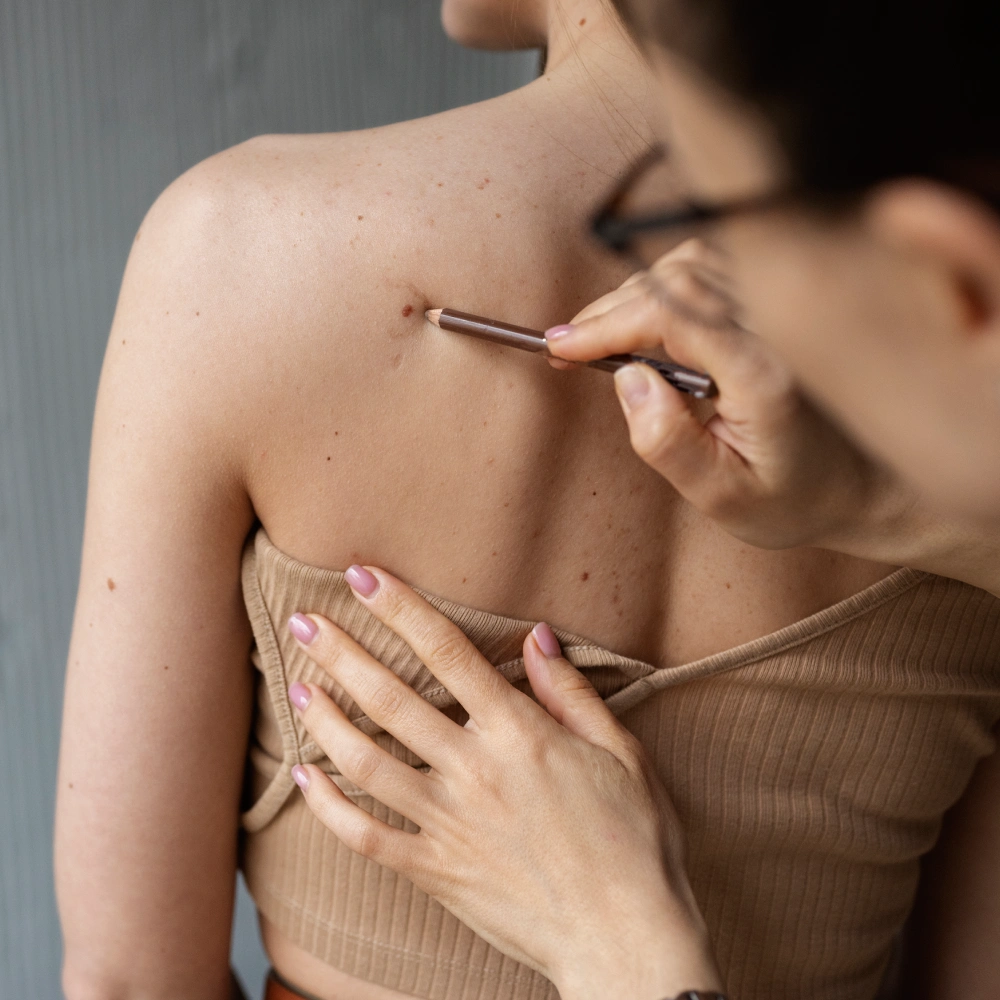
What is Mole / Nevus Treatment?
Mole / nevus treatment refers to dermatological approaches aimed at evaluating moles and certain benign skin lesions from both aesthetic and medical perspectives, and removing them safely when appropriate. The most important point is that not every mole should be considered merely a cosmetic concern. While some pigmented lesions may only cause visual discomfort, others may require medical evaluation. Therefore, mole treatment is not simply about “removal,” but a process that begins with accurate identification followed by the selection of the most appropriate method.
Why are not all moles evaluated the same way?
Not every dark lesion on the skin has the same structure. Some may be benign moles that have been present for years without change, while others may show changes in shape, color, or size over time. For this reason, the first step in mole treatment is to determine whether the lesion is truly benign. A mole that is aesthetically unwanted and a lesion that raises medical suspicion should not be approached in the same way. A safe and successful approach begins with understanding the nature of the lesion.
How is mole / nevus evaluation performed?
Initially, factors such as how long the mole has been present, whether it has changed recently, and whether there are symptoms such as itching, bleeding, crusting, or irritation are assessed. This is followed by a clinical examination, and in most cases, dermoscopic evaluation is performed for a more detailed assessment. As noted in the provided content, dermoscopic examination is a fundamental step before treatment. This stage is critical, as the appropriate treatment method can only be selected after gaining sufficient information about the lesion.
Which moles are removed for aesthetic reasons?
Some moles may not pose a medical risk but can still be aesthetically bothersome. Especially those located on the face, neck, or visible areas, which draw attention during makeup or in photographs, may fall into this category. In addition, raised lesions that are frequently irritated by shaving, clothing friction, or jewelry contact may be removed for comfort as well as aesthetic reasons. However, even aesthetically unwanted moles should first be evaluated medically.
When is a more cautious approach required?
Moles that are newly developed, rapidly growing, changing in color, irregular in borders, itching, bleeding, or crusting require more careful evaluation. Asymmetry, color variation, or deviation from the usual appearance are also important warning signs. In such cases, the priority is not immediate cosmetic removal, but determining whether the lesion is medically safe. When necessary, pathological examination may be planned as part of a safe approach.
Which methods can be used in mole / nevus treatment?
The treatment method depends on the structure, depth, location, and evaluation results of the mole. In some benign and appropriately selected superficial lesions, device-based methods or controlled ablation techniques may be considered. In other cases, shave excision or surgical removal may be more appropriate. Especially for lesions that may require pathological examination, methods that allow tissue analysis are preferred. Therefore, a “one method fits all” approach is not appropriate.
Are laser or radiofrequency suitable for all moles?
No. Laser or radiofrequency methods may only be considered for selected lesions that are confirmed to be benign. In some pigmented lesions, preserving tissue for potential pathological examination is important. Therefore, in lesions with unclear structure, changes, or suspicious features, superficial procedures alone may not be appropriate. From a safety perspective, method selection should always take priority over aesthetic expectations.
How is the procedure performed?
The procedure varies depending on the selected method. In some small and suitable lesions, treatment can be performed quickly under local anesthesia. In cases requiring surgical removal, the lesion is excised in a controlled manner and may be sent for pathological examination if needed. As noted in the provided content, after dermoscopic evaluation, treatments such as laser ablation or radiofrequency can be applied under local anesthesia. However, the main principle is to first confirm suitability and then select the most appropriate method.
What is the recovery process like?
The healing process depends on the size of the mole, its location, and the chosen method. After the procedure, mild redness, crusting, sensitivity, or a limited scar may occur. Small and superficial lesions on the face may heal more quickly, while deeper or larger lesions require more careful follow-up. It is important not to create unrealistic expectations such as “no scarring at all.” The goal is to achieve the best possible aesthetic healing while ensuring safe treatment.
Will there be a scar?
The risk of scarring varies depending on the type, depth, location of the lesion, the method used, and the individual’s skin characteristics. In some small superficial lesions, scarring may be minimal. However, the healing response is not the same for everyone. Areas such as the shoulders, back, and chest may be more prone to visible scarring. Therefore, discussing both aesthetic expectations and the possibility of scarring before treatment is important for realistic planning.
Who is it suitable for?
This treatment may be suitable for individuals with benign moles or similar lesions that are aesthetically bothersome or prone to irritation from shaving or friction. However, suitability should not be based solely on patient preference, but on the nature of the lesion. Suspicious or changing lesions may require a different approach. A detailed evaluation by Dr. Mustafa Kemal Ataönder helps determine the safest and most appropriate treatment plan.
Why is careful evaluation essential in mole treatment?
Mole treatment should not be considered only as a cosmetic procedure. Some pigmented lesions may change over time and carry medical significance. Therefore, instead of focusing solely on quick removal, it is essential to establish an accurate diagnosis and choose the appropriate method. A safe approach includes dermoscopic evaluation, possible pathological examination, and personalized treatment planning. While aesthetic results are important, the priority is always correct medical assessment.
Frequently asked questions about mole / nevus treatment
Can all moles be removed with laser?
No. Not all moles are suitable for laser treatment. Lesions with uncertain structure, changes, or those requiring pathological evaluation may need different methods.
Why is dermoscopic evaluation important before removal?
Because dermoscopy provides more detailed information about the lesion and helps determine the most appropriate treatment method. It is a key part of safe planning.
Will there be a scar after mole removal?
The risk of scarring is not completely zero. It varies depending on the size, depth, location of the mole, and the individual’s skin characteristics. The goal is to achieve the best possible aesthetic healing.
Can suspicious moles be removed for cosmetic purposes?
They should first be medically evaluated. In suspicious lesions, the priority is accurate diagnosis and, if necessary, pathological examination rather than cosmetic removal.
What should I do if I notice changes in a mole?
If you observe a new mole, growth, color change, itching, bleeding, or crusting, it is important not to delay evaluation. In such cases, a dermatological or medical assessment should be performed first.
Learn more: For detailed information about mole / nevus treatment and other treatment options, you can visit the contact page. For informative content about treatments, you can explore the YouTube channel.
