

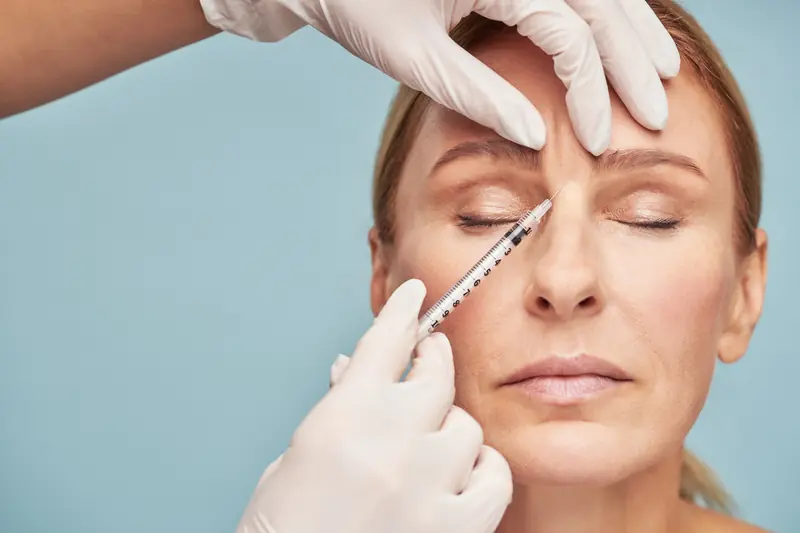
Botox is one of the most frequently asked topics in aesthetic treatments. Individuals researching these treatments often seek to understand how Botox works, how long its effect lasts, and what to pay attention to after the application.
The application of botulinum toxin, also known as Botox, temporarily reduces the contraction signals that certain muscles receive from the nerves. Thanks to this effect, the appearance of some lines associated with facial movements can be alleviated.
So what exactly is Botox? Is it suitable for everyone? When does its effect begin? Here are the 12 most frequently asked questions and answers about Botox.
1. What is Botox?
Botox is the common name given to the form of the protein called botulinum toxin used for medical purposes. It temporarily affects the communication between the nerve and the muscle, reducing the contraction force of the targeted muscle.
It can be used in the aesthetic field to reduce the appearance of forehead lines, lines between the eyebrows and lines around the eyes, especially those that appear with facial expressions.
Botulinum toxin is used not only for aesthetic purposes but also in the treatment of some health problems as a result of appropriate medical evaluation.
2. Which Areas Can Be Treated with Botox?
botulinum toxin treatment can be evaluated in different regions depending on the person's facial anatomy and needs.
The most frequently covered areas are:
- Forehead: Horizontal lines formed by raising the eyebrows.
- Between the eyebrows: Vertical lines that become evident with the frowning movement.
- Around the eyes: Lines around the eyes when smiling.
Apart from these, in some special cases, the area around the nose, jaw muscles and different anatomical regions can also be evaluated by the physician. The same application approach is not suitable for every region.
3. When Do Botox Results Become Noticeable?
The effect of Botox application usually does not appear immediately after the procedure. The first changes usually begin to be noticed within a few days.
Generally, a period of 10-14 days may be required to evaluate the effect more clearly. This period may vary depending on the person, the area applied and the product used.
4. How long does the effect of Botox last?
The effect of botulinum toxin applications for aesthetic purposes can usually last around 3-4 months. However, this period is not the same for everyone.
Muscle structure, metabolism, application site, product properties and individual response of the person may change the duration of effect.
The necessity of repeating the application and its appropriate timing should be determined by physician evaluation.
5. Does Botox Affect Natural Facial Expressions?
The purpose of Botox is not to completely eliminate facial expression. In practice, the movement of the targeted muscles is reduced in a controlled manner.
The application plan should be created according to the person's facial anatomy, facial expression use and medical needs. Inappropriate doses or application points may cause undesirable facial changes.
Therefore, it is important to evaluate the natural movements of the face and personal characteristics.
6. Is the Botox Procedure Painful?
botulinum toxin treatment is performed using fine-tipped needles. You may feel brief stinging or mild discomfort during the procedure.
The discomfort felt may vary depending on the person's sensitivity, application area and procedure conditions.
The person's expectations and sensitivities should be shared with the physician before the procedure.
7. What Is the Recovery Time After Botox?
botulinum toxin treatment is generally a procedure completed in a short time. However, any redness, tenderness or small bruises that may occur after the procedure may vary from person to person.
The time to return to daily activities is evaluated according to the person's condition and scope of application.
It is important to follow the recommendations given by the doctor after the procedure.
8. Does Botox Have Side Effects?
As with every medical practice, botulinum toxin treatment has possible side effects.
Some effects that may be seen after application are:
- Temporary redness.
- Mild swelling or tenderness.
- Bruising.
- Headache.
- Temporary muscle movement changes depending on the application site.
- In some cases, droopy eyelids.
In rare cases, more serious undesirable effects may occur. Immediate medical attention should be sought if symptoms such as difficulty swallowing, speaking or breathing occur.
9. Who Is Not a Suitable Candidate for Botox?
Botox is not suitable for everyone. Before the application, the person's health history, existing diseases and medications used should be evaluated.
Detailed medical evaluation is required, especially in the following cases:
- Pregnancy or breastfeeding period.
- Known hypersensitivity to botulinum toxin or product ingredients.
- Neuromuscular diseases.
- Active infection at the application site.
- Use of medications that may affect muscle-nerve communication.
The decision on suitability should be made by the physician based on the person's individual health condition.
10. What Is the Difference Between Botox and Dermal Fillers?
Botox and fillers are applications with different mechanisms of action.
While botulinum toxin temporarily reduces the contraction of certain muscles, dermal fillers are used to provide volume support in the area where they are applied.
Therefore, the purposes of use of the two applications are not the same. Which method will be evaluated depends on the anatomical characteristics and needs of the person.
11. Does Botox Completely Eliminate Wrinkles?
Botox can be especially effective on dynamic lines that appear with the movement of facial muscles.
However, not every line on the skin is caused by muscle movements. Different factors such as sun damage, changes in skin elasticity, the aging process and loss of volume can also contribute to the formation of wrinkles.
Therefore, it should not be thought that Botox will completely eliminate all wrinkles. The expected effect varies depending on the person's skin structure and the characteristics of the lines.
12. What Should Be Considered Before the Procedure?
Before the application, the person's health history, medications used, allergies and previous aesthetic procedures, if any, should be evaluated.
In particular, the physician should be informed about blood thinners, drugs that affect muscle-nerve communication, and existing health problems.
The person's expectations from the application are also an important part of the evaluation process. The possible effects, limits and risks of the application should be explained before the procedure.
Conclusion: Why is Accurate Information About Botox Important?
Botox is a procedure that temporarily reduces the movement of certain muscles and is used in both aesthetic and medical fields. However, the appropriateness, scope and expected effect of the application may differ for each individual.
Therefore, before making a decision about botulinum toxin treatment, it is important for the physician to evaluate the person's anatomical characteristics, health history and expectations.
This article is for general information purposes. It is not a substitute for diagnosis or treatment recommendation. Personal evaluation and application decision should be made by a competent physician.
Frequently Asked Questions
The first effects of Botox usually begin to be felt within 3-5 days; It takes 10-14 days for the muscle to relax and the final balanced result to occur.
It lasts for an average of 4-6 months, depending on the person's muscle strength, metabolism and facial habits.
It can be applied to people who are over 18 years of age, who are disturbed by expression lines, or who apply for preventive purposes before the wrinkles deepen, with the evaluation of a physician.
T.R. According to the Ministry of Health and international medical guidelines, Botox is not recommended during pregnancy and breastfeeding and is not applied in our clinic.
Situations that increase blood pressure, such as bending upside down, lifting heavy weights and sauna, should be avoided for the first 24 hours; Light walking can be done after 24 hours, intense training can be done after 48 hours.
It is a very rare and temporary condition. With correct anatomy knowledge and appropriate dosage, the risk is minimal; It disappears completely within a few weeks as the effect of the toxin decreases.
This content has been prepared for informational purposes by Dr. Mustafa Kemal Ataönder. All information on this website is for informational purposes only and does not replace physician examination, diagnosis, or treatment planning.