 en
en 
Medical Skin Care
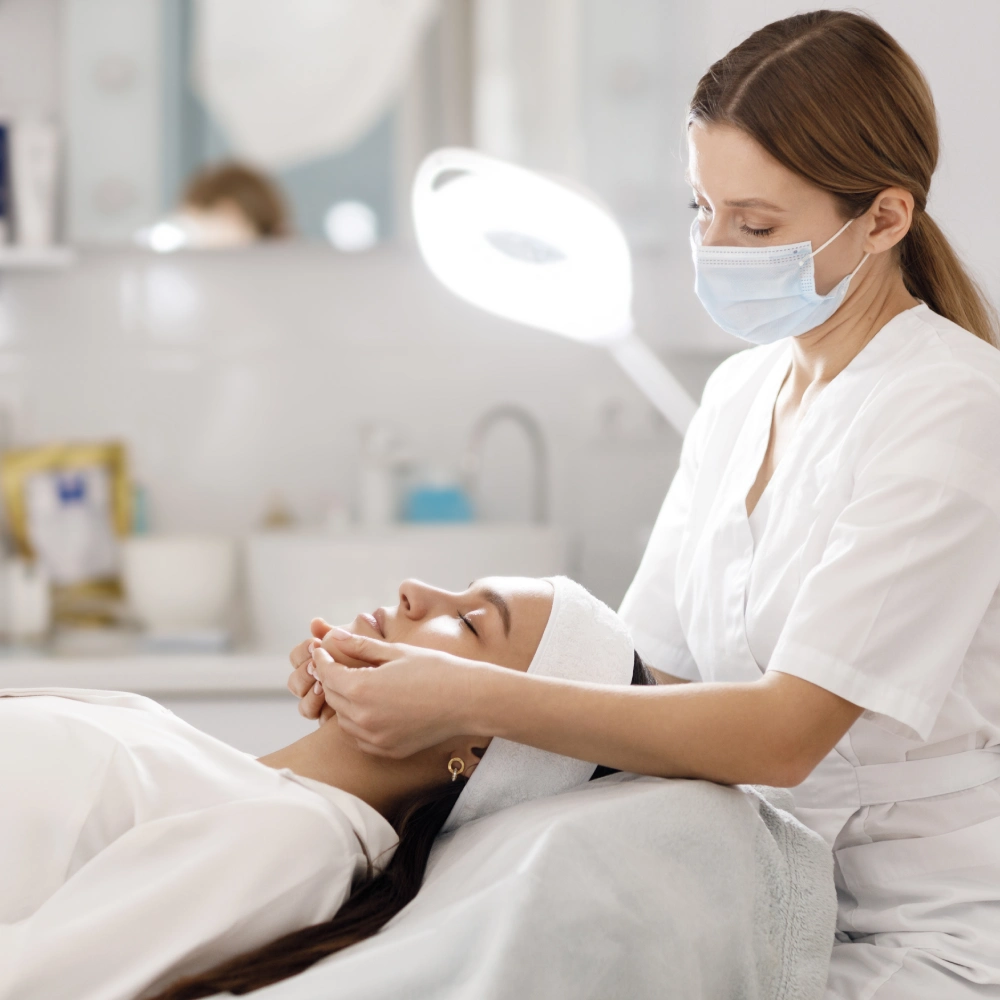
What is Medical Skin Care?
Medical skin care is a clinical approach that, unlike standard facials, aims not only to temporarily refresh the skin surface but also to provide professional-level cleansing, purification, hydration, and support based on skin type, current concerns, and barrier needs. The goal is not limited to achieving immediate radiance. It also focuses on clearing pores, supporting the skin barrier, balancing excess sebum, and maintaining overall skin quality. Therefore, when planned regularly and individually, medical skin care can support long-term skin health.
Why is medical skin care different from standard facials?
In standard treatments, superficial cleansing and short-term relaxation are often the main focus, whereas medical skin care is based on analyzing the true needs of the skin and creating a more professional protocol. Skin type, oil balance, sensitivity level, hydration needs, pore structure, acne tendency, pigmentation risk, and barrier condition are evaluated together. Based on this, the products, serums, and application steps are customized. Instead of applying the same treatment to every skin type, a controlled and individualized approach is adopted.
What is medical skin care used for?
This treatment is most commonly preferred for concerns such as dull appearance, clogged pores, blackheads, oil imbalance, dehydration, sensitivity, uneven texture, and overall skin fatigue. For some individuals, the goal is not only to make the skin look brighter, but to achieve a more balanced, cleaner, and healthier skin structure where makeup also looks better. Especially in cases where urban lifestyle, irregular sleep, stress, sun exposure, or improper product use place a burden on the skin, medical skin care becomes a supportive option.
What steps are included in medical skin care?
Although the protocol varies depending on the skin type, it usually begins with a detailed skin analysis. This is followed by gentle yet effective cleansing, pore purification, an appropriate peeling step, hydration and barrier-supporting serum applications, and soothing finishing steps. As stated in the provided content, deep cleansing, peeling, active serum infusion, and targeted treatments can be combined in a personalized manner. In some patients, blackhead-focused care may be prioritized, while in others, hydration and barrier repair may be more important. Therefore, the same steps are not applied in the same order for every individual.
How does medical skin care work?
When properly planned, medical skin care can help reduce surface buildup, minimize the appearance of pores, and support a cleaner and more balanced skin appearance. At the same time, by improving hydration levels, it contributes to a more vibrant, smoother, and healthier look. The key point is that the treatment does not aggressively peel or stress the skin, but instead provides balanced care according to its needs. Especially for sensitive skin, a calming and barrier-strengthening approach may be more beneficial than aggressive procedures.
Which skin types is it suitable for?
Medical skin care can be considered for many skin types. In oily and acne-prone skin, pore cleansing and sebum balance may be prioritized, while in dry and sensitive skin, hydration support and barrier repair become more important. In combination skin, different steps can be planned according to regional needs. As noted in the provided content, this treatment is suitable for all skin types and is particularly recommended for individuals seeking professional-level and long-term skin care support. Therefore, medical skin care is not only for problematic skin, but also for those who want to maintain and support their skin regularly.
How often should medical skin care be performed?
The frequency of treatment depends on the skin’s condition and goals. For some individuals, monthly sessions may be sufficient, while others may benefit from more frequent or more spaced sessions. In cases of increased blackheads, oil imbalance, irregular texture, or seasonal sensitivity changes, the treatment frequency may be adjusted. The goal is not to over-treat the skin, but to support it at appropriate intervals.
Why is it more effective when combined with home care?
Medical skin care is performed in a clinical setting; however, its long-term effectiveness is closely related to daily skincare habits and products used at home. Using a gentle cleanser, a suitable moisturizer, and regular sunscreen supports the results of professional care. Therefore, if improper products are used or the skin is irritated after treatment, the desired effects may be shorter-lived. Consistency between clinical care and home routine is essential for optimal results.
What is the advantage in terms of natural results?
One of the key advantages of medical skin care is that it enhances skin quality without altering facial features. Unlike treatments such as fillers or Botox, it focuses on improving the skin itself. The goal is to achieve a brighter, cleaner, more balanced, and well-maintained appearance. Individuals may not feel a dramatic change in their facial structure, but they often notice that their skin looks healthier and more refined. This makes it an attractive option for those who want to maintain a natural look.
What should be considered after the procedure?
After treatment, mild redness, sensitivity, or a temporary feeling of tightness may occur. These effects are usually temporary. It is important to avoid harsh peeling products, strong acids, or improper product use that may irritate the skin. Sunscreen use is especially important, as the skin may become temporarily more sensitive after the procedure. Gentle care and avoiding irritation help maintain results and support skin health.
Why is pre-treatment evaluation important?
Every skin has different needs. Some individuals may have active acne, others may have rosacea tendencies, dryness, or barrier sensitivity. Therefore, medical skin care should not be planned based solely on the desire for treatment, but on a proper understanding of the skin’s current condition. Especially in sensitive, allergic, or pigmentation-prone skin, more careful planning is required. A detailed evaluation by Dr. Mustafa Kemal Ataönder helps determine what the skin needs and how the most appropriate care protocol should be designed.
Frequently asked questions about medical skin care
Is medical skin care suitable for everyone?
It can be suitable for many skin types; however, the content and application steps must be customized. Sensitive, acne-prone, or pigmentation-prone skin requires more careful planning.
Is there a difference between medical and standard skin care?
Yes. Medical skin care includes professional products, detailed skin analysis, and targeted treatment steps. The goal is not only relaxation, but controlled and effective skin support.
Is immediate glow visible after the procedure?
Most individuals notice a cleaner, more radiant, and refreshed appearance after the treatment. However, long-term benefits depend on regular care and a proper home routine.
How often should it be done?
This varies depending on the skin’s needs. Monthly care may be sufficient for some, while others may require more frequent or more spaced sessions.
Is medical skin care beneficial for acne?
It can be supportive for acne-prone skin, especially in terms of pore cleansing and sebum balance. However, it does not replace medical acne treatment and should be combined with a proper acne management protocol when necessary.
Learn more: For detailed information about medical skin care and other treatment options, you can visit the contact page. For informative content about treatments, you can explore the YouTube channel.
